I mean, the title already says a lot but this idea came to me while watching a video essay about “stop trying to be the cool girl” by mickey Galvin on YouTube. Go check that video out, it’s amazing.
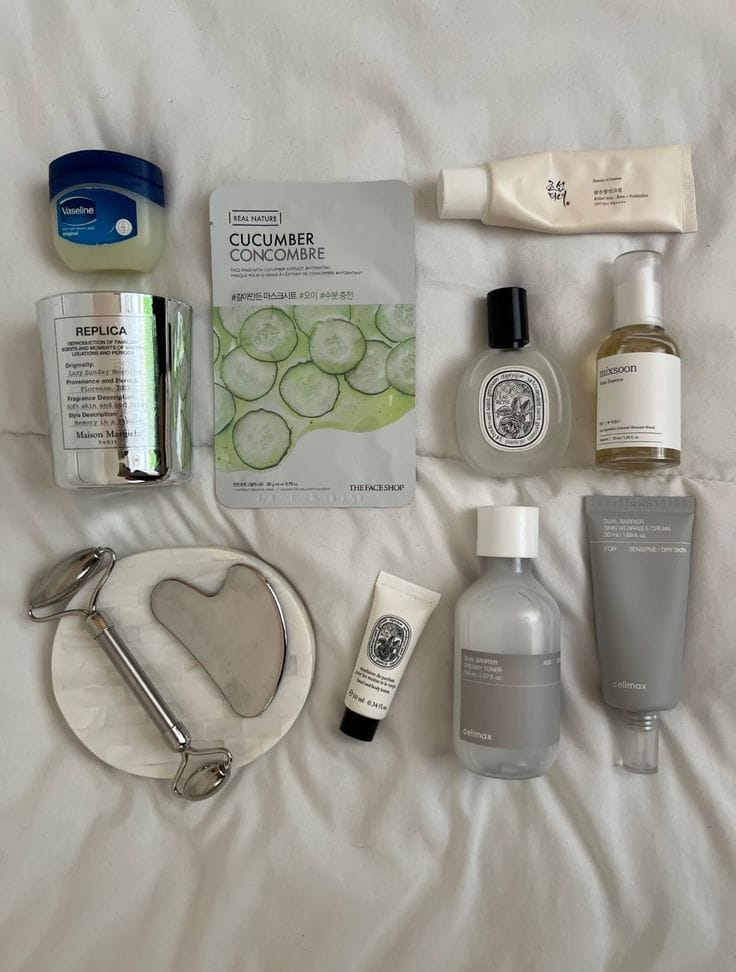
My idea actually came from a short she featured at the end of the vide by another creator where they mentioned how modern skincare and lifestyle practices are ‘in our head’. She gave examples of things like matcha, ice baths, gua sha, etc. She also mentions that the pursuit of beauty has become so all consuming, we are becoming hollow husks.
And I think this is why usually I can’t watch video essays, because they are so often rooted in white culture and western morals that it can seem out of touch with the reality that I come from. This is of course, not to shame or shun any creator, the videos aren’t bad; just sometimes not relatable.
As someone growing up Asian/South Asian, the pursuit of beauty is woven into our culture deeply. The belief of “you are beautiful as you are you are” is not as common in Asian culture as “these are our checkboxes and if you don’t fit, we will make you”. Luckily, the environment is changing and younger generations aren’t as obvious in pointing out what is wrong with you. That being said, Asian culture chases a certain type and grade of beauty, something made obvious by how many modern skin-care trends originated here.
So, why don’t these practices actually change us in drastic measures? Because these practices are not meant to change your facial trajectory, they are meant to improve and enhance your natural features. We haven’t always had plastic surgery and neither have we lived in pursuit of it forever.
In my opinion and analysis, western culture is big on individualism, and yet more likely to pursue a common goal.
I’ll put it like so; most of western culture is tends to seem similar to one another, most of American states are like copies with minor changes. This allows everyone to pursue one common goal, or identity.
Whereas in India you have 28 states and 8 Union territories; all with a vividly varying and unique culture. The people look, talk, behave, and even feel different. This makes the pursuit of one common vision almost impossible.
Everybody cannot achieve the same style, diet, aesthetic, etc. The difference in our general living is too vivid.
It’s the same with Asia; as the largest continent, every country has a radically new culture- with very few common grounds to go on.
The reason our pursuit of living up to one uniform standard is so strong is because colonization influenced us beyond just invading our country; it also invaded our minds.
When the British first came to India, they saw a blank slate ready to draw on; our ancestors were trained to be office workers and take orders from officials. This shaped our education too, which is why almost every Indian kid is encouraged to become an engineer or doctor; where art was once heavily encouraged and respected.
In pursuit of making a British thinking Indian class, we were left being pushed into a herd. Forced to act, think, and move in an uniform way. This pushed the idea that one single lifestyle was pursuable for everyone.
In the case of eastern Asia, I can’t say as strongly because my research or understanding of their history isn’t as deep, but clearly, even those cultures didn’t always seek to alter the way people looked. The practices that originated in Korea, Japan, and China are often grouped together and said to not give the promised results.
Rice masks, gua sha, matcha, matcha masks, and the more Indian mud masks and turmeric masks are all meant to improve and enhance your skin or face. These are not replacements for plastic surgery and can never be, because that is not what they are meant for.
Multiple colonizations and being altered to fit their brackets have pushed our cultures to chase a certain standard and appearance.
All that being said, when western culture perceives Asian cultures and questions those methods, it’s important to understand that these practices are maintenance and enhancement techniques. Very different from alteration.
So, if you are going to follow trends and practice methods like gua sha, drinking matcha, putting on mud and rice masks; just remember it’s a culture and tradition. These practices are heritage and should be treated as such, not as only trends or westernized versions of them.
When you use these methods, consider how their original purpose was very different from what media today has portrayed it as. Don’t judge them or give your verdict without knowledge of the roots of these practices; it is not just a trend. It’s years of culture, practice, knowledge, and tradition
Be more educated in your trends this Wednesday,
Janhavi ❤
[No offense or shading to any creators, this post is for informative purposes only, based on my perspective.]
 J's Musings
Leave a comment